

Many men begin noticing changes in their urinary habits after the age of 40. Frequent trips to the bathroom, a weak urine stream, difficulty starting urination, and waking up several times during the night are common signs that may point to an enlarged prostate. These symptoms can interfere with sleep, work, travel, and overall quality of life.
One of the most common causes is Benign Prostatic Hyperplasia (BPH), a non-cancerous enlargement of the prostate gland that affects millions of men worldwide. While medications and medical procedures are widely used to manage BPH, many people wonder if simple lifestyle changes can make a real difference.
A common question is: Can exercise help shrink an enlarged prostate?
The short answer is yes—but with an important clarification. Exercise alone is unlikely to dramatically reduce the size of the prostate. However, regular physical activity can significantly improve BPH symptoms, reduce inflammation, support healthy hormone balance, improve bladder function, and lower the risk of symptom progression.
In this comprehensive guide, you’ll learn:
- Whether exercise can actually shrink an enlarged prostate
- What scientific research says
- The best exercises for enlarged prostate relief
- How walking, strength training, yoga, and Kegel exercises help
- Lifestyle habits that work together with exercise
- When exercise is enough—and when medical treatment is necessary
If you’re looking for natural ways to reduce enlarged prostate symptoms, this guide will help you build a practical and effective routine.
What Is an Enlarged Prostate (BPH)?
An enlarged prostate, medically known as Benign Prostatic Hyperplasia (BPH), is one of the most common age-related conditions affecting men. The prostate is a walnut-sized gland located below the bladder and surrounding the urethra—the tube that carries urine out of the body.
As men age, the prostate often grows larger. Because it surrounds the urethra, this growth can gradually squeeze the urinary passage, making it more difficult for urine to flow normally.
Although BPH is not cancer and does not increase the risk of prostate cancer, it can seriously affect daily comfort and quality of life if left unmanaged.
What Causes BPH?
Doctors still don’t know one single cause, but several factors contribute to prostate enlargement.
Common causes include:
- Natural aging
- Changes in testosterone and estrogen levels
- Increased activity of DHT (dihydrotestosterone)
- Family history
- Obesity
- Lack of physical activity
- Poor metabolic health
- Chronic inflammation
As hormone levels shift with age, prostate cells may continue multiplying, leading to gradual enlargement.
Common Symptoms of an Enlarged Prostate
Symptoms usually develop slowly and worsen over time.
| Symptom | How It Feels |
|---|---|
| Frequent urination | Needing to urinate more often than usual |
| Nocturia | Waking several times at night to urinate |
| Weak urine stream | Reduced force during urination |
| Difficulty starting | Hesitation before urine begins flowing |
| Dribbling | Urine continues leaking after finishing |
| Feeling of incomplete emptying | Bladder doesn’t feel fully empty |
| Sudden urgency | Strong urge to urinate immediately |
If symptoms become severe, untreated BPH may increase the risk of urinary retention, bladder infections, or bladder damage.
Who Is Most at Risk?
Several factors increase the likelihood of developing BPH.
| Risk Factor | Effect |
|---|---|
| Age over 40 | Risk increases steadily with age |
| Family history | Genetics play an important role |
| Excess body weight | Higher inflammation and hormonal imbalance |
| Diabetes | Associated with increased BPH risk |
| Sedentary lifestyle | Reduced circulation and poorer metabolic health |
| High blood pressure | Linked with worsening urinary symptoms |
This is one reason why exercise for enlarged prostate has become an important topic among healthcare professionals.
Can Exercise Help Shrink an Enlarged Prostate?
This is one of the most frequently searched questions by men experiencing urinary symptoms.
The answer is both encouraging and realistic.
Exercise is unlikely to physically shrink the prostate gland to a significant degree. However, regular exercise can improve many of the underlying factors that make BPH symptoms worse.
Instead of focusing only on prostate size, experts now emphasize improving urinary function, reducing inflammation, supporting healthy circulation, maintaining a healthy weight, and improving bladder control.
For many men, these improvements lead to fewer symptoms—even if the prostate itself doesn’t become much smaller.
What Research Says
Research consistently shows that physically active men tend to experience:
- Lower risk of developing BPH
- Reduced urinary symptoms
- Better bladder function
- Improved quality of life
- Lower levels of chronic inflammation
- Healthier body weight
Moderate aerobic exercise has been associated with improvements in urinary frequency, urgency, and nighttime urination.
Men who remain active also appear less likely to experience rapid progression of BPH symptoms compared with sedentary individuals.
Can Exercise Actually Reduce Prostate Size?
Current evidence suggests that exercise does not directly shrink the enlarged prostate in most cases.
However, it may indirectly support prostate health by:
- Reducing abdominal fat
- Improving insulin sensitivity
- Lowering chronic inflammation
- Supporting healthy testosterone balance
- Improving blood circulation
- Enhancing bladder and pelvic floor muscle function
These changes can make urination easier and improve daily comfort, even if prostate size remains relatively unchanged.
Therefore, if someone asks, “Can exercise reduce prostate size?”, the most accurate answer is:
Exercise usually improves symptoms more than it reduces the actual size of the prostate.
How Exercise Improves BPH Symptoms
Regular movement benefits nearly every system involved in urinary health.
Exercise may help by:
- Relaxing muscles around the bladder
- Strengthening pelvic floor muscles
- Improving blood flow to pelvic organs
- Reducing inflammation throughout the body
- Supporting healthy weight management
- Improving sleep quality
- Lowering stress hormones
These combined effects often lead to:
- Better urinary flow
- Less urgency
- Fewer nighttime bathroom visits
- Improved bladder emptying
- Better daily comfort
This explains why doctors often recommend prostate health exercises as part of a comprehensive treatment plan.
Benefits of Exercise for Men with BPH
Exercise offers much more than improved fitness. It supports multiple aspects of prostate and urinary health.
Better Bladder Control
Strengthening the muscles surrounding the bladder improves urinary control and reduces accidental leakage.
Pelvic floor exercises are especially effective for improving bladder support.
Improved Urinary Flow
Regular aerobic activity improves blood circulation and muscle function, helping urine pass more easily through the urinary tract.
Many men notice a stronger urine stream after maintaining a consistent exercise routine.
Reduced Nighttime Urination (Nocturia)
Nocturia is one of the most frustrating BPH symptoms.
Regular physical activity improves fluid regulation, sleep quality, and bladder efficiency, helping many men wake up fewer times during the night.
Better sleep also improves energy, mood, and overall health.
Weight Management
Being overweight significantly increases the risk of worsening BPH symptoms.
Extra abdominal fat contributes to:
- Higher inflammation
- Hormonal imbalance
- Increased pressure on the bladder
Losing even a modest amount of weight can reduce symptom severity.
Lower Inflammation
Chronic low-grade inflammation plays an important role in many age-related diseases, including BPH.
Exercise naturally reduces inflammatory markers throughout the body, supporting healthier prostate tissue over time.
Better Hormone Balance
Regular movement helps regulate hormones involved in prostate growth.
Although exercise doesn’t eliminate DHT, maintaining a healthy body weight and improving insulin sensitivity supports healthier hormonal function.
Improved Quality of Life
Perhaps the biggest benefit is how much better many men feel overall.
Consistent exercise can improve:
- Confidence
- Energy levels
- Mobility
- Sleep quality
- Mental health
- Sexual wellness
- Daily productivity
Instead of simply treating symptoms, exercise helps improve overall health—which benefits the prostate as well.
For men over 40, combining regular physical activity with healthy eating, stress management, and routine medical checkups is one of the most effective long-term strategies for managing BPH naturally.
Best Exercises for an Enlarged Prostate
Regular physical activity is one of the most effective natural ways to reduce enlarged prostate symptoms. While exercise may not dramatically shrink the prostate gland itself, it can improve bladder function, reduce inflammation, support a healthy weight, and make everyday life much more comfortable.
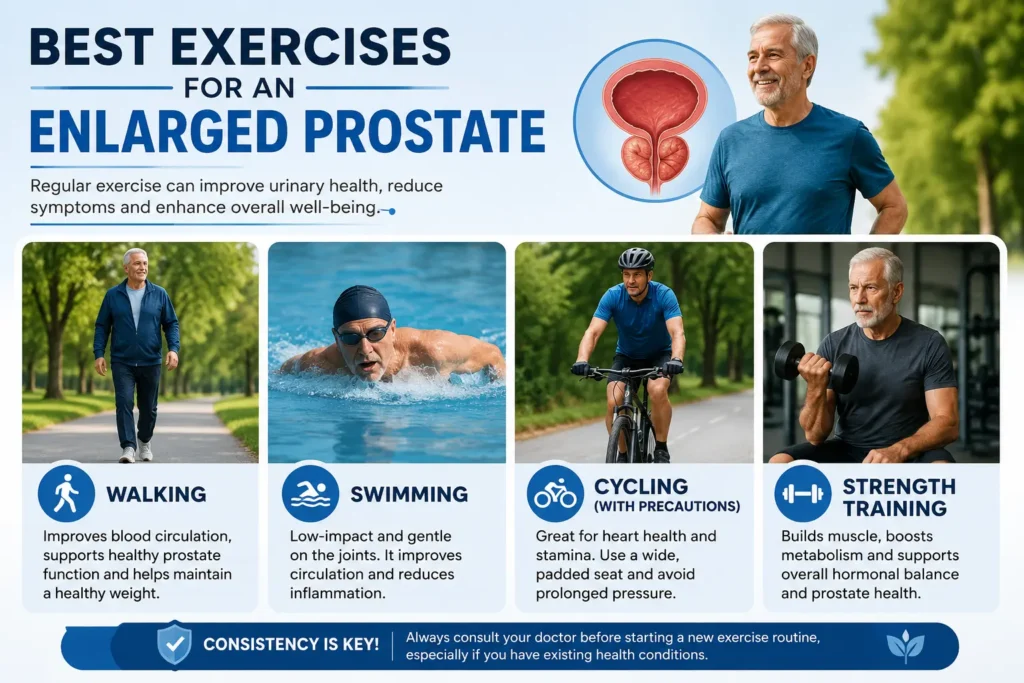
The key is choosing exercises that improve cardiovascular health, strengthen muscles, and reduce pressure on the pelvic area without worsening urinary symptoms.
Let’s look at the best exercises for enlarged prostate.
Walking
Walking is often considered the safest and most effective exercise for enlarged prostate. It is easy to start, requires no special equipment, and is suitable for almost every fitness level.
Research has shown that men who stay physically active generally experience fewer BPH symptoms than those with a sedentary lifestyle.
Benefits of Walking
- Improves blood circulation
- Helps maintain a healthy weight
- Reduces inflammation
- Supports heart health
- Improves bladder function
- May reduce nighttime urination
Many men ask:
Does Walking Help an Enlarged Prostate?
Yes. Although walking does not directly shrink the prostate, it can reduce symptom severity and improve urinary flow over time. Brisk walking for 30–45 minutes most days of the week is an excellent starting point.
Recommended Goal
- 30–45 minutes
- 5–6 days per week
Swimming
Swimming is another excellent low-impact exercise for men with BPH.
Unlike running or jumping, swimming places very little stress on the joints while providing a full-body workout.
Benefits
- Improves cardiovascular fitness
- Reduces body fat
- Supports healthy circulation
- Lowers inflammation
- Gentle on knees and hips
Swimming is particularly beneficial for older men who experience arthritis or back pain.
Recommended Goal
- 30–40 minutes
- 2–3 sessions each week
Cycling (With Precautions)
Cycling remains a controversial topic for prostate health.
Short recreational rides are generally safe for most men. However, spending long hours on a narrow bicycle seat may place continuous pressure on the prostate and pelvic floor.
Tips for Safe Cycling
- Use a prostate-friendly saddle
- Stand up occasionally while riding
- Wear padded cycling shorts
- Limit very long rides
- Stop if pelvic discomfort develops
For men with severe urinary symptoms, walking or swimming may be a better option until symptoms improve.
Strength Training
Strength training helps preserve muscle mass, improve metabolism, and support healthy hormone levels.
Men over 40 naturally lose muscle as they age, making resistance training especially valuable.
Benefits
- Helps maintain healthy body weight
- Improves insulin sensitivity
- Supports testosterone balance
- Reduces abdominal fat
- Improves overall health
Focus on moderate weights rather than maximum lifting.
Recommended Exercises
- Squats
- Lunges
- Push-ups
- Resistance bands
- Dumbbell rows
- Shoulder presses
- Bodyweight exercises
Aim for two or three sessions each week.
Stretching Exercises
Tight muscles around the hips and pelvis may contribute to discomfort and reduced mobility.
Gentle stretching improves flexibility and reduces muscular tension.
Helpful stretches include:
- Hip flexor stretch
- Hamstring stretch
- Child’s Pose
- Cat-Cow stretch
- Seated spinal twist
- Butterfly stretch
Stretch after each workout for about 10–15 minutes.
Yoga
Yoga combines flexibility, controlled breathing, stress reduction, and muscle strengthening.
Stress can worsen urinary urgency, making yoga particularly useful for men with BPH.
Yoga for Enlarged Prostate Symptoms
Helpful poses include:
- Child’s Pose
- Bridge Pose
- Cobra Pose
- Butterfly Pose
- Happy Baby Pose
- Legs-Up-the-Wall Pose
Yoga may improve:
- Pelvic blood flow
- Flexibility
- Stress management
- Sleep quality
- Bladder relaxation
Practice yoga 2–3 times per week.
Pelvic Floor (Kegel) Exercises
Among all prostate health exercises, Kegels are one of the most effective for improving urinary control.
These exercises strengthen the muscles that support the bladder and urethra.
Benefits include:
- Better bladder control
- Reduced urine leakage
- Improved urinary flow
- Less urgency
- Improved recovery after prostate treatments
Many healthcare providers recommend pelvic floor exercises as part of an enlarged prostate treatment naturally approach.
Exercises to Avoid If You Have BPH
While staying active is important, certain exercises may temporarily worsen symptoms if performed incorrectly.
Long-Distance Cycling
Extended rides on a hard, narrow seat can place prolonged pressure on the prostate.
If you enjoy cycling:
- Choose shorter rides
- Invest in an ergonomic seat
- Take frequent breaks
Heavy Lifting Without Proper Breathing
Holding your breath while lifting heavy weights increases pressure inside the abdomen and pelvis.
Instead:
- Exhale during lifting
- Use moderate weights
- Avoid straining
- Focus on proper form
High-Impact Activities During Symptom Flare-Ups
If urinary symptoms become severe, temporarily reduce activities like:
- Sprinting
- Jumping
- High-intensity interval training
- Contact sports
Low-impact options like walking or swimming are usually better until symptoms improve.
Pelvic Floor Exercises (Kegels) for BPH
Pelvic floor exercises deserve special attention because they specifically target the muscles involved in urination.
Unlike cardio exercises, Kegels directly strengthen the muscles that control urine flow.
What Are Kegel Exercises?
The pelvic floor is a group of muscles supporting the:
- Bladder
- Prostate
- Rectum
When these muscles become weak, urinary control often declines.
Kegel exercises strengthen these muscles without requiring any equipment.
How to Perform Kegels Correctly
Step 1
Identify the correct muscles.
Imagine trying to stop urine midway through urination. The muscles you tighten are your pelvic floor muscles.
Do not make a habit of stopping urine repeatedly while actually urinating, as this is only a way to identify the muscles.
Step 2
Empty your bladder before beginning.
Step 3
Tighten the pelvic floor muscles.
Hold for:
- 5 seconds
Relax for:
- 5 seconds
Repeat:
- 10 repetitions
Complete:
- 3 sets daily
As your muscles become stronger, gradually increase each contraction to 10 seconds.
Common Mistakes to Avoid
Many men accidentally perform Kegels incorrectly.
Avoid these mistakes:
- Holding your breath
- Tightening the stomach
- Tightening the thighs
- Tightening the buttocks
- Moving the hips
- Performing exercises while urinating regularly
- Doing too many repetitions too quickly
Remember to breathe normally throughout each repetition.
Weekly Pelvic Floor Exercise Schedule
| Day | Morning | Afternoon | Evening |
|---|---|---|---|
| Monday | 10 Kegels | 10 Kegels | 10 Kegels |
| Tuesday | 10 Kegels | 10 Kegels | 10 Kegels |
| Wednesday | 10 Kegels | 10 Kegels | 10 Kegels |
| Thursday | 10 Kegels | 10 Kegels | 10 Kegels |
| Friday | 10 Kegels | 10 Kegels | 10 Kegels |
| Saturday | 10 Kegels | 10 Kegels | 10 Kegels |
| Sunday | 10 Kegels | 10 Kegels | 10 Kegels |
Consistency matters far more than intensity. Most men begin noticing better bladder control after several weeks of regular practice.
By combining aerobic activity, strength training, stretching, yoga, and pelvic floor exercises, you create a well-rounded routine that supports urinary function, mobility, and overall prostate health.
Lifestyle Changes That Work Better with Exercise
Exercise is one of the best habits for managing BPH, but it works even better when combined with other healthy lifestyle changes. Together, these habits can reduce urinary symptoms, improve overall health, and slow the progression of an enlarged prostate.
Eat a Prostate-Friendly Diet
A balanced diet can help reduce inflammation, support healthy hormone levels, and maintain a healthy weight.
Foods to Eat More Often
- Colorful vegetables (broccoli, spinach, kale, carrots)
- Fruits rich in antioxidants (berries, oranges, pomegranates)
- Whole grains (oats, brown rice, quinoa)
- Fatty fish (salmon, sardines, mackerel)
- Nuts and seeds (especially pumpkin seeds and walnuts)
- Beans and lentils
- Olive oil
- Tomatoes (rich in lycopene)
Foods to Limit
- Processed foods
- Sugary drinks
- Fried foods
- Excess red meat
- High-fat dairy products
- Highly processed snacks
A Mediterranean-style diet is often recommended because it supports heart health and may also benefit prostate health.
Maintain a Healthy Weight
Excess body fat—especially around the abdomen—is linked to worse BPH symptoms.
Losing even 5–10% of your body weight may help:
- Improve urinary flow
- Reduce bladder pressure
- Lower inflammation
- Improve hormone balance
- Increase energy levels
Combining exercise with a healthy diet is one of the most effective natural ways to reduce enlarged prostate symptoms.
Stay Hydrated—But Be Smart About It
Many men mistakenly drink very little water because they want to urinate less. However, dehydration can irritate the bladder and make symptoms worse.
Hydration Tips
- Drink water consistently throughout the day.
- Reduce fluid intake 2–3 hours before bedtime if nighttime urination is a problem.
- Limit large amounts of fluids at one time.
- Choose water over sugary beverages.
Reduce Caffeine and Alcohol
Both caffeine and alcohol can irritate the bladder and increase urinary urgency.
If you notice symptoms worsen after consuming them, try reducing:
- Coffee
- Energy drinks
- Black tea
- Beer
- Wine
- Spirits
You don’t necessarily have to eliminate them completely, but moderation can make a noticeable difference.
Improve Sleep Habits
Poor sleep and frequent nighttime urination often create a frustrating cycle.
Better sleep habits include:
- Going to bed at the same time each night
- Avoiding heavy meals before bedtime
- Limiting screen time before sleep
- Emptying your bladder before bed
- Keeping your bedroom cool and quiet
Manage Stress
Stress doesn’t cause BPH, but it can make urinary symptoms feel worse.
Helpful stress-management techniques include:
- Deep breathing exercises
- Meditation
- Yoga
- Walking outdoors
- Spending time with family
- Listening to relaxing music
Reducing stress may also improve sleep and overall well-being.
Can Exercise Replace Medication or Surgery?
One of the most common questions men ask is whether exercise alone can treat an enlarged prostate.
The answer depends on how severe your symptoms are.
When Exercise May Be Enough
Lifestyle changes may be sufficient if:
- Symptoms are mild
- Daily activities aren’t significantly affected
- There are no complications such as urinary retention
- Your healthcare provider recommends watchful waiting
In these cases, regular exercise, weight management, and dietary improvements may help control symptoms effectively.
When Medication Is Needed
If symptoms become moderate or begin affecting your quality of life, your doctor may recommend medications.
These medicines may help:
- Relax the muscles around the prostate and bladder neck
- Reduce prostate size over time (for some men)
- Improve urinary flow
- Decrease urinary frequency
Continue exercising even if you’re taking medication, as both approaches often work well together.
When Surgery May Be Necessary
Surgery may be recommended if BPH causes:
- Complete urinary retention
- Recurrent urinary tract infections
- Bladder stones
- Kidney damage
- Blood in the urine related to BPH
- Severe symptoms that don’t improve with medication
Modern surgical procedures are generally effective, and your urologist can help determine the best option based on your condition.
How Long Does It Take to See Results?
Many men expect immediate improvements, but lifestyle changes take time.
Typical Timeline
| Time | What You May Notice |
|---|---|
| 2–4 Weeks | Increased energy and improved fitness |
| 4–8 Weeks | Better bladder control and fewer urgency episodes |
| 2–3 Months | Improved urinary flow and fewer nighttime bathroom trips |
| 3–6 Months | Maximum benefits from consistent exercise and healthy habits |
Keep in mind that results vary depending on age, overall health, symptom severity, and consistency.
Factors That Affect Improvement
- Body weight
- Fitness level
- Diet quality
- Stress levels
- Sleep habits
- Existing medical conditions
- Consistency with exercise
The more consistent your routine, the greater your chances of experiencing long-term improvement.
Sample Weekly Exercise Plan for Men Over 40
| Day | Exercise | Duration |
|---|---|---|
| Monday | Brisk Walking | 30 Minutes |
| Tuesday | Strength Training | 30 Minutes |
| Wednesday | Yoga + Kegel Exercises | 30 Minutes |
| Thursday | Swimming or Brisk Walking | 30–40 Minutes |
| Friday | Strength Training + Stretching | 35 Minutes |
| Saturday | Walking + Kegel Exercises | 40 Minutes |
| Sunday | Light Recovery Walk | 20–30 Minutes |
This balanced routine combines cardio, strength training, flexibility, and pelvic floor exercises for comprehensive prostate and overall health.
Common Mistakes That Can Worsen BPH Symptoms
Even healthy habits can be less effective if certain mistakes are made.
Sitting Too Long
Prolonged sitting reduces circulation and may place additional pressure on the pelvic region.
Try to stand up and walk for a few minutes every hour.
Skipping Warm-Ups
Starting intense exercise without warming up increases the risk of muscle strain.
Spend 5–10 minutes warming up before every workout.
Overtraining
More exercise isn’t always better.
Too much intense activity without adequate recovery can increase fatigue and stress on the body.
Aim for consistency rather than excessive intensity.
Ignoring Hydration
Not drinking enough water can concentrate urine and irritate the bladder.
Stay hydrated throughout the day.
Exercising with a Full Bladder
A full bladder can make workouts uncomfortable and increase urinary urgency.
Empty your bladder before beginning exercise whenever possible.
Frequently Asked Questions (FAQ)
Exercise is unlikely to significantly reduce the actual size of the prostate. However, it can improve urinary symptoms, reduce inflammation, support a healthy weight, and enhance overall prostate health.
Yes. Brisk walking is one of the safest and most effective exercises for men with BPH. It improves circulation, helps manage weight, and may reduce urinary symptoms.
Yes. Kegel exercises strengthen the pelvic floor muscles, improving bladder control, reducing urine leakage, and helping with urinary flow.
A combination of brisk walking, swimming, strength training, stretching, yoga, and pelvic floor exercises offers the greatest benefits.
Yes. Losing excess weight can reduce inflammation, improve hormone balance, and decrease pressure on the bladder, leading to better urinary function.
Moderate cycling is generally safe, but long-distance cycling on a narrow seat may increase pressure on the prostate. Using a prostate-friendly saddle and taking breaks can help reduce discomfort.
Aim for at least 150 minutes of moderate exercise each week, along with strength training two to three times weekly and daily Kegel exercises.
For mild symptoms, exercise and lifestyle changes may be enough. However, men with moderate to severe symptoms should follow their healthcare provider’s treatment plan, which may include medication or surgery.
Conclusion
If you’ve been wondering, “Can exercise help shrink an enlarged prostate?”, the evidence suggests a balanced answer. Exercise alone is unlikely to dramatically reduce prostate size, but it can play a major role in relieving BPH symptoms, improving urinary flow, strengthening bladder control, reducing inflammation, and enhancing your overall quality of life.
The best results come from combining regular physical activity, a healthy diet, weight management, stress reduction, proper hydration, and routine medical checkups. Activities like brisk walking, swimming, strength training, yoga, and pelvic floor (Kegel) exercises are all excellent choices for men over 40 looking to support long-term prostate health.
If your symptoms persist, worsen, or begin interfering with daily life, don’t rely on exercise alone. Consult a qualified healthcare provider or urologist for a proper evaluation and personalized treatment plan. Taking action early can help prevent complications and keep you active, healthy, and comfortable for years to come.