
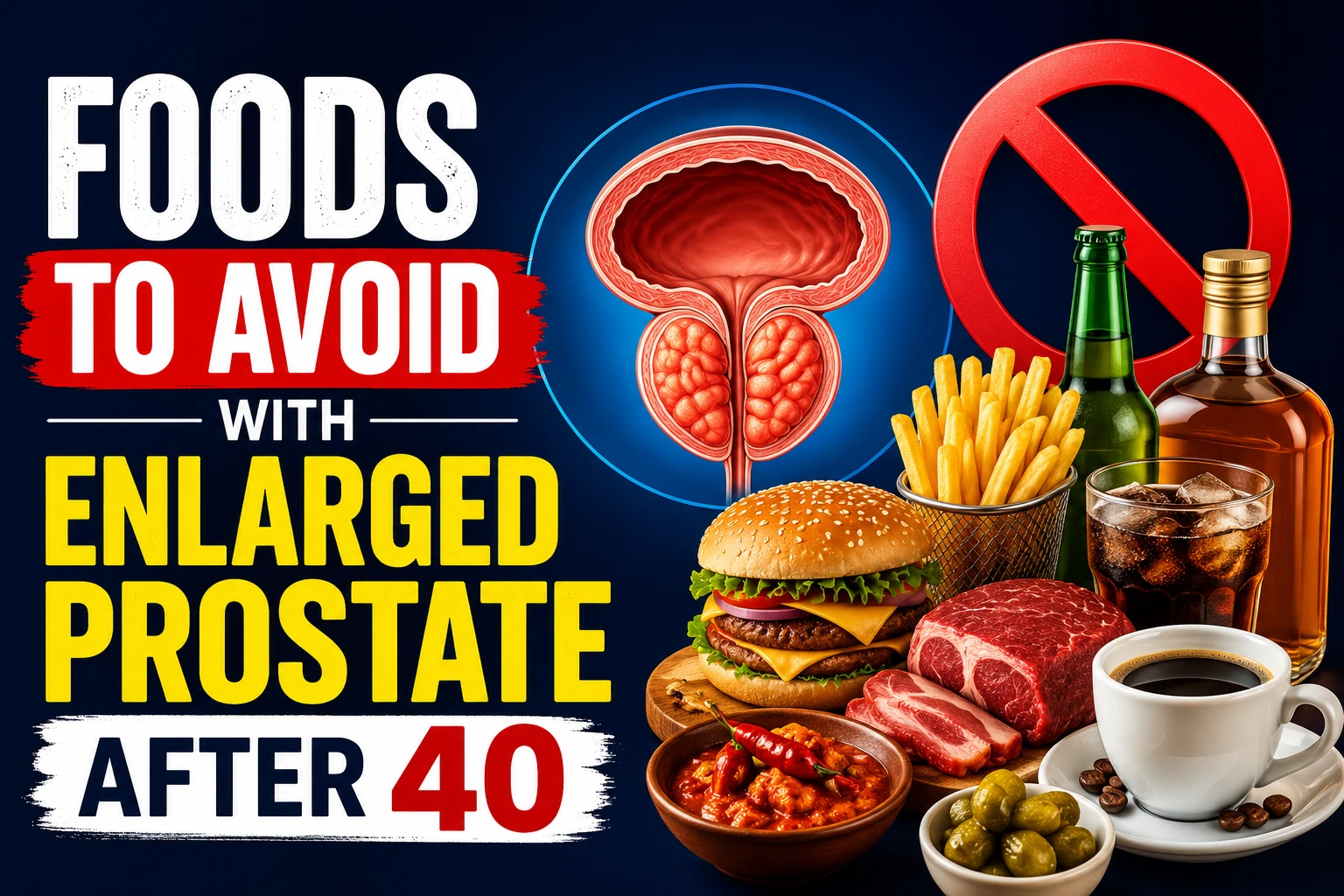
As men get older, changes in urinary health become more common. Many men over 40 start noticing symptoms like waking up multiple times at night to urinate, weak urine flow, or a constant feeling of bladder pressure. In many cases, these issues are linked to an enlarged prostate, also known as benign prostatic hyperplasia (BPH).
One factor that often gets overlooked is diet. Certain foods to avoid with enlarged prostate after 40 may actually make urinary discomfort worse by irritating the bladder, increasing inflammation, or affecting fluid balance in the body.
The good news is that small dietary adjustments may help improve comfort and reduce some everyday urinary frustrations. Understanding which foods may trigger symptoms can help men make smarter choices without following overly strict diets.
Why Food Choices Matter for Prostate Wellness
The Link Between Diet, Inflammation, and Urinary Health
The prostate is a small gland, but it can have a big impact on daily comfort when it becomes enlarged. While aging and hormones play a major role, eating habits may also influence inflammation and bladder sensitivity.
Some unhealthy foods for prostate health contain high amounts of:
- Sodium
- Added sugars
- Saturated fats
- Artificial ingredients
- Inflammatory oils
These ingredients may increase irritation in the urinary tract and make symptoms feel more noticeable.
For example, foods that may irritate the bladder in men can sometimes lead to:
- Frequent nighttime urination
- Sudden urges to urinate
- Burning sensations
- Increased pelvic discomfort
Diet alone does not cause prostate enlargement, but poor food choices may worsen symptoms over time.
Warning Signs Your Diet May Be Affecting Your Prostate
Common Issues Men Often Notice
Many men do not immediately connect food with urinary problems. However, certain meals or drinks may trigger symptoms within a few hours.
Common signs include:
More Bathroom Trips During the Night
Some foods linked to frequent urination at night can increase bladder activity, especially in the evening.
Sudden Urinary Urgency
You may feel an intense need to urinate shortly after consuming caffeinated drinks, spicy foods, or alcohol.
Burning or Discomfort After Certain Meals
Bladder irritation may become more noticeable after heavily processed or spicy meals.
Feeling Pressure in the Lower Abdomen
Inflammatory foods for enlarged prostate may contribute to bloating and pelvic discomfort in some men.
Keeping a simple food journal for a few weeks can sometimes help identify personal triggers.
10 Foods That May Worsen Enlarged Prostate Symptoms
1. Processed Fast Foods
Why Highly Processed Meals May Increase Inflammation
Fast food may be convenient, but it is often packed with unhealthy fats, sodium, preservatives, and refined carbohydrates.
Common examples include:
- Burgers
- Fried chicken
- Pizza
- Processed sandwiches
- Frozen microwave meals
These foods may support chronic inflammation in the body, which can affect urinary comfort.
Men who regularly eat heavily processed meals may also struggle with weight gain, another factor linked to worsening prostate symptoms.
A better option is choosing freshly prepared meals with lean protein and vegetables whenever possible.
2. Sugary Soft Drinks
How Excess Sugar May Affect Bladder Function
Sugary beverages are among the worst foods for enlarged prostate after 40 when consumed regularly.
Sodas and sweetened drinks may:
- Irritate the bladder
- Increase urinary frequency
- Contribute to obesity
- Affect blood sugar balance
Some men notice stronger urinary urgency after drinking large amounts of soda, especially in the evening.
Drinks to limit include:
- Regular soda
- Energy drinks
- Sweet tea
- Sweetened coffee beverages
- Packaged fruit punches
Water, infused water, or herbal tea are often gentler choices.
3. Salty Snacks and Packaged Foods
The Hidden Problem With Too Much Sodium
High-sodium foods can increase fluid retention and place extra pressure on the bladder.
Common high-salt foods include:
- Chips
- Instant noodles
- Processed meats
- Canned soups
- Frozen snacks
Too much sodium may also contribute to higher blood pressure and poor overall health.
Many packaged foods contain more salt than people realize. Reading nutrition labels can help reduce excess sodium intake.
4. Spicy Foods
Can Spices Trigger Urinary Irritation?
Spicy meals are enjoyable for many people, but they can sometimes irritate the bladder lining.
Hot peppers, chili sauces, and heavily spiced foods may trigger:
- Burning sensations
- Increased urgency
- More frequent urination
Not every man reacts the same way. Some tolerate moderate spice well, while others notice immediate discomfort.
If symptoms worsen after spicy meals, reducing portion sizes or avoiding late-night spicy dinners may help.
5. Fatty Red Meat
High-Fat Diets and Men’s Health Concerns
Fatty cuts of red meat may contribute to inflammation and weight gain when eaten in excess.
Examples include:
- Bacon
- Sausage
- Ribeye steak
- Processed deli meats
- High-fat burgers
Some studies suggest diets high in saturated fat may negatively affect long-term prostate wellness.
Instead of eliminating meat completely, many men benefit from moderation and healthier protein sources such as:
- Fish
- Skinless chicken
- Beans
- Turkey
- Lentils
6. Alcoholic Beverages
Why Alcohol May Increase Nighttime Urination
Alcohol is one of the most common foods that may increase nighttime urination.
It can:
- Irritate the bladder
- Increase urine production
- Disrupt sleep quality
- Worsen dehydration
Beer, wine, and liquor may all affect urinary symptoms differently depending on the person.
Many men notice fewer nighttime bathroom trips when they reduce alcohol intake, especially within a few hours before bed.
7. Too Much Coffee and Caffeine
The Connection Between Caffeine and Bladder Sensitivity
Coffee is a daily habit for millions of people, but caffeine may overstimulate the bladder.
This can lead to:
- Frequent urination
- Sudden urgency
- Difficulty sleeping
- Increased nighttime urination
Caffeine is not only found in coffee. It also appears in:
- Energy drinks
- Some teas
- Soda
- Chocolate
Men over 40 do not necessarily need to stop drinking coffee completely. However, reducing intake later in the day may help improve urinary comfort.
8. Deep-Fried Foods
How Unhealthy Oils May Support Inflammation
Deep-fried foods are often high in trans fats and inflammatory oils.
Common examples include:
- French fries
- Fried chicken
- Onion rings
- Fried snacks
- Fast-food appetizers
These foods may contribute to inflammation, weight gain, and poor cardiovascular health.
Cooking methods like baking, grilling, or air frying are often healthier alternatives.
9. Artificially Sweetened Products
Hidden Ingredients That May Irritate the Bladder
Some men are sensitive to artificial sweeteners found in:
- Diet soda
- Sugar-free gum
- Low-calorie desserts
- Artificial drink mixes
Ingredients like aspartame and saccharin may irritate the bladder in certain individuals.
If urinary urgency increases after consuming diet beverages, trying natural alternatives for a few weeks may help identify whether artificial sweeteners are a trigger.
10. Full-Fat Dairy Products
Dairy Foods and Digestive or Urinary Discomfort
Full-fat dairy products may contribute to inflammation or digestive discomfort for some people.
Foods to monitor include:
- Whole milk
- Heavy cream
- Full-fat cheese
- Ice cream
- Butter-heavy dishes
Some men report feeling more bloated or uncomfortable after large amounts of dairy.
Lower-fat dairy or plant-based alternatives may feel easier on digestion and overall comfort.
Better Food Swaps for Men Over 40
Healthier Alternatives That May Support Urinary Wellness
Avoiding problematic foods does not mean eating bland meals. Small upgrades can make a big difference.
Helpful swaps include:
| Instead Of | Try |
|---|---|
| Soda | Water with lemon |
| Fried foods | Grilled meals |
| Processed snacks | Nuts or fruit |
| Fatty meats | Fish or turkey |
| Sugary desserts | Fresh berries |
| White bread | Whole grains |
Whole foods rich in nutrients may better support overall health and urinary wellness.
Foods high in fiber may also support healthy digestion and weight management.
Eating Habits That May Help Reduce Nighttime Urination
Smart Daily Diet Tips
Certain eating habits may help reduce urinary discomfort, especially at night.
Portion Control
Large heavy meals late in the evening may increase pressure on digestion and bladder comfort.
Late-Night Eating Habits
Try avoiding spicy, salty, or sugary foods close to bedtime.
Hydration Timing
Staying hydrated is important, but drinking large amounts of fluid right before sleep may increase nighttime bathroom trips.
Many men find it helpful to:
- Drink more fluids earlier in the day
- Reduce caffeine in the evening
- Limit alcohol at night
Balance is key. Dehydration can also irritate the bladder.
Simple Lifestyle Changes for Better Urinary Comfort
Healthy Daily Routines Worth Following
Diet is only one part of the picture. Lifestyle habits also matter.
Staying Active
Regular movement may support healthy circulation and weight management.
Maintaining Healthy Weight
Extra abdominal weight may place additional pressure on the bladder.
Managing Stress Levels
Stress can sometimes worsen bladder sensitivity and urinary urgency.
Improving Sleep Quality
Poor sleep habits may make nighttime symptoms feel even more exhausting.
Simple daily routines often work better long term than extreme lifestyle changes.
Medical Symptoms That Should Not Be Ignored
When Urinary Problems Need Professional Attention
Some urinary symptoms require medical evaluation.
Speak with a healthcare professional if you notice:
- Blood in urine
- Painful urination
- Fever or chills
- Inability to urinate
- Sudden worsening symptoms
- Severe pelvic pain
These symptoms may be linked to infections or other medical conditions that need proper diagnosis.
Frequently Asked Questions
Which foods are hardest on the prostate?
Highly processed foods, sugary drinks, excess alcohol, deep-fried foods, and high-sodium meals are often considered some of the worst foods for enlarged prostate after 40.
Can spicy food increase frequent urination?
For some men, spicy foods may irritate the bladder and increase urinary urgency or nighttime urination.
Is coffee bad for prostate health?
Coffee itself is not necessarily harmful, but too much caffeine may increase bladder sensitivity and frequent urination in some men.
What foods are better for men over 40?
Many experts encourage diets rich in:
- Vegetables
- Fruits
- Whole grains
- Lean protein
- Healthy fats
- Fiber-rich foods
Balanced eating habits may support overall wellness and urinary comfort.
Conclusion
Understanding the foods to avoid with enlarged prostate after 40 may help men reduce everyday urinary discomfort and improve overall wellness.
Small changes often matter more than extreme restrictions. Paying attention to foods that may trigger urinary problems in men can help identify personal patterns and improve daily comfort over time.
Focusing on balanced meals, hydration habits, and healthier lifestyle routines may support better urinary health and quality of life as men get older.